


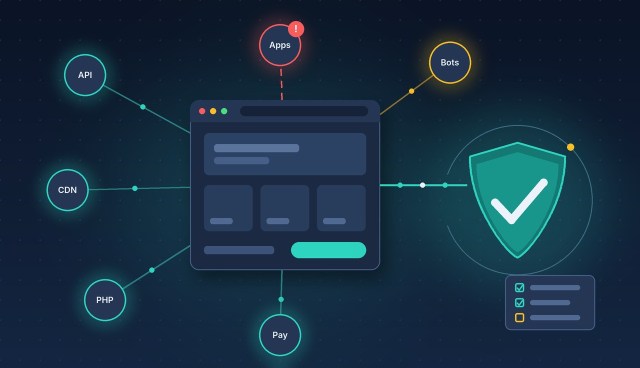

Websites Are Never Done: Why Your Site Needs Oversight and Governance After Launch
For most of the web’s history, a website project had a finish line. You hired an agency, approved a design, and launched. After that, someone on your team swapped out a few photos and updated the store hours when they changed. The site did its job for three or four years until it looked dated, and then you started the process over.
That model worked for a digital brochure. Most business websites today look nothing like a brochure. An eCommerce store processes payments, syncs inventory with an ERP or a distributor, passes orders to a shipping platform, fires tracking pixels for marketing, and stores customer accounts. An application layers its own business logic on top of all that. Each connection relies on software that another company updates on its own schedule, and the whole thing sits on an open internet that grows more hostile each year.
A website like that needs an owner after launch. At Inverse Paradox, we find that most businesses don’t have one.
At Inverse Paradox, this is what we see
Our team works through the same handful of issues with client after client. Each one has a quantifiable, technical explanation, and none of them traces back to how the site was built.
One failing service can take down your whole site
Your website borrows pieces from other companies. The checkout calls a payment platform’s API. A product page loads a reviews widget, a chat tool, an analytics tag, and an icon library from someone else’s servers. Behind the scenes, your server may call a shipping API for rates or a distributor’s API for inventory before it can finish building the page.
Each of those connections is a dependency, and a failing dependency looks to your customers like a failing website. A script loaded at the top of the page without async or defer makes the browser stop and wait for it. If the vendor’s server hangs, your visitors stare at a blank screen. An uncaught JavaScript error in one embedded tool can stop the add to cart button or the checkout form from working. On the server side, a slow API call with no timeout ties up the worker processes that serve your pages. Enough of those stack up and the whole site stops responding, even though your own code never changed.
We’ve watched this happen. A payment platform had trouble on its own network, and a client’s customers saw failed transactions on the store. A distributor’s integration sent a flood of malformed requests to another client’s site, enough to slow it down for real shoppers until the distributor fixed the problem on their end. Someone needs to watch the whole chain and know which link failed.
Global outages land on your doorstep
The largest providers fail too. On November 18, 2025, a latent bug at Cloudflare knocked out a large part of the web, including ChatGPT, Spotify, and X. Cloudflare sits in front of an estimated 20% of all websites, so visitors saw Cloudflare error pages even where a site’s own server was fine. Three months later, on February 20, 2026, a Cloudflare configuration change took down sites for hours for customers using its Bring Your Own IP service.
The software under your site needs urgent fixes as well. On October 21, 2026, the PHP project shipped emergency security releases for two flaws, nicknamed PHP2Shell, that let an attacker run code on a server without logging in. PHP rated each flaw 9.2 out of 10, and CERT-EU issued an advisory urging organizations to patch. PHP runs WordPress and WooCommerce. Sites with an owner got patched that week. Sites without one may still run the vulnerable version today.
You can’t prevent an outage at Cloudflare or your payment provider. You can have someone who spots it within minutes, confirms the source, keeps your team informed, and has a plan for the parts you control.
Most of your traffic isn’t human
Thales found in its 2026 Bad Bot Report that automated traffic made up 53% of all web traffic in 2025, the second year in a row that bots outnumbered people. AI crawlers make up a growing share of that. Some bots follow the rules. Others scrape your prices, test stolen credit cards against your checkout, or hammer your server until it falls over. Our team has seen a single bot hit a store with several hundred thousand requests in a narrow window of time. No reasonable hosting plan absorbs that without help.
The fix in those cases is a firewall rule. Someone identifies the bot, then blocks or throttles it. Tools like Cloudflare make that possible, and many of our clients already have an account. Owning the tool and watching it are two separate jobs, though. If nobody reviews the traffic, you find out about the next bot when customers start calling.
The same goes for your forms. Contact forms, account signups, and newsletter boxes draw spam bots, and spammers change tactics often enough that your filtering needs periodic upgrades.
Software ages even when nobody touches it
WordPress, WooCommerce, plugins, JavaScript libraries, and PHP all release updates on their own schedules for security patches, bug fixes, and compatibility. Skip those updates for a year and you carry a backlog of risk. Apply them without testing and you can break checkout on a Friday afternoon. Versions also expire: PHP 8.2 stops receiving security fixes on December 31, 2026. At Inverse Paradox, we recently traced a spike in server load on a client site to a common icon library that had started misfiring. Websites don’t break at random. A quantifiable cause sits behind each failure, and someone has to go find it.
The myth of the maintenance free Shopify store
At Inverse Paradox, we regularly talk with business owners who chose Shopify because they believed it would take maintenance off their plate. Shopify does handle a lot: hosting, platform updates, server security, and PCI compliance for its own checkout. Everything you add on top of the platform is yours to manage, including your theme, your apps, your tracking pixels, your consent setup, and your accessibility.
Apps cause most of the trouble. Each app you install can inject scripts into your storefront. Stack enough of them and pages slow down, apps conflict with each other, and features break after one vendor pushes an update. Uninstalling an app doesn’t always remove the code it added to your theme.
October 2026 showed the security side of this. Between about October 10 and 20, attackers hijacked several Shopify apps from established vendors, including HulkApps, Selleasy, and Swym. They planted malicious code in the settings those apps pulled from their vendors’ servers. A shopper who clicked Checkout landed on a lookalike payment page that captured their card details, then got forwarded to the real Shopify checkout so the order looked normal. The attackers never touched Shopify’s checkout; they worked through code that merchants had invited onto their own storefronts. Selleasy alone reports more than 49,000 active stores, and Shopify advised one Australian retailer to keep its store closed for days while it cleaned up.
Shopify keeps its platform secure. You still need someone to review which apps you run, watch what they load, and test your checkout on a regular basis.
The rules keep changing
Data privacy law in the US is a moving target. Congress has not passed a federal privacy law, so the states fill the gap. Twenty states have comprehensive consumer privacy laws in effect in 2026, with Indiana, Kentucky, and Rhode Island joining on January 1, and Alabama and Oklahoma scheduled for 2027. These laws differ on consent, opt outs, and data rights, and some require you to honor browser privacy signals such as Global Privacy Control. If your site collects an email address, runs analytics, or fires a marketing pixel, some of these laws likely apply to you. A cookie banner and privacy policy written three years ago won’t reflect them.
Accessibility carries the same kind of exposure. WCAG 2.2 is the current W3C standard for accessible web content, and plaintiffs use WCAG as the yardstick in ADA website lawsuits. UsableNet counted more than 5,000 ADA digital accessibility lawsuits in 2025, with eCommerce sites the most common target at about 70% of cases. UsableNet also found that 45% of those suits named companies that had been sued before. A one time accessibility fix won’t hold up for long. A new product page, a promo banner, or a plugin update can each introduce a new barrier.
Promotions and maintenance are separate jobs
Many of our clients have capable people working in their sites every day. They add products, launch promotions, and publish content. That work matters, and it belongs to marketing and merchandising. Maintenance means updating the software, testing those updates, reviewing performance, watching traffic and third party services, and keeping up with regulations. A business can do the first job well and leave the second untouched for years.
Hosting is its own job too. A good managed host, or a platform like Shopify, keeps the server up and the platform underneath it stable. Your plugins, your apps, your firewall settings, your privacy setup, and your accessibility all sit on top of that layer, outside what hosting covers.
A rebuild won’t solve this either. A redesign can fix real design and architecture problems, and sometimes a business needs one. The maintenance clock restarts on launch day, though, and if nobody owns the new site, you’ll face the same issues again within a year or two.
Someone has to own it
It doesn’t matter who built your website or what platform it runs on. Someone has to fill the role of maintaining and governing it. That person can sit on your staff if they have the time and the technical depth. You can also hand the role to a partner. The risky choice, and a common one, is assuming someone fills the role when nobody does.
How Inverse Paradox can help
We offer two plans built for this gap.
Preventative Maintenance Agreement (PMA). Our team handles routine updates to your platform, plugins, and dependencies on a regular schedule. We apply updates on a plan and catch small problems before they become outages.
Routine Compliance Audit (RCA). We review your site on a recurring basis against current data privacy regulations and WCAG 2.2 accessibility standards. We track changes in privacy law, implement the updates your site needs, and flag accessibility barriers as your content and features change.
The PMA keeps your software healthy. The RCA keeps your site in line with the rules. If your website runs an eCommerce store, works as an application, or collects any customer information at all (a contact form counts), you should consider both.
Let’s talk
The internet will keep changing whether your website keeps up or not. If you want to know where your site stands today, contact Inverse Paradox to learn more about our Preventative Maintenance Agreement and Routine Compliance Audit plans.